
Quotas, usage, billing: your building's parking on autopilot
Multi-tenant parking means quotas to enforce, usage to track, and invoices nobody wants to build by hand. Commuty gives each tenant self-service control within the capacity you set — and gives you the data to optimise, rebalance and bill automatically.


Wij helpen teams elke dag bij het beheer van het woon-werkverkeer









Every tenant asks for more spaces. The data shows who actually needs them.
A shared car park is three jobs at once: holding each tenant to its share, seeing what is actually used, and turning that into an invoice. Commuty runs all three from one platform — so the building fills up, the quota arguments end, and month-end takes minutes instead of a spreadsheet.
Everything you need to solve multi-tenant parking
Set the quotas, delegate the operations
You define each tenant's capacity and rules; they manage their own users, priorities and visitors in self-service. No operational burden on your team — and no tenant calling about someone else's spots.
- each tenant gets their own admin, with no sight of another tenant's users or data
- quotas hold at the barrier automatically, so nobody has to police the car park
- change a tenant's capacity mid-lease without touching anyone else's

Know exactly who uses what
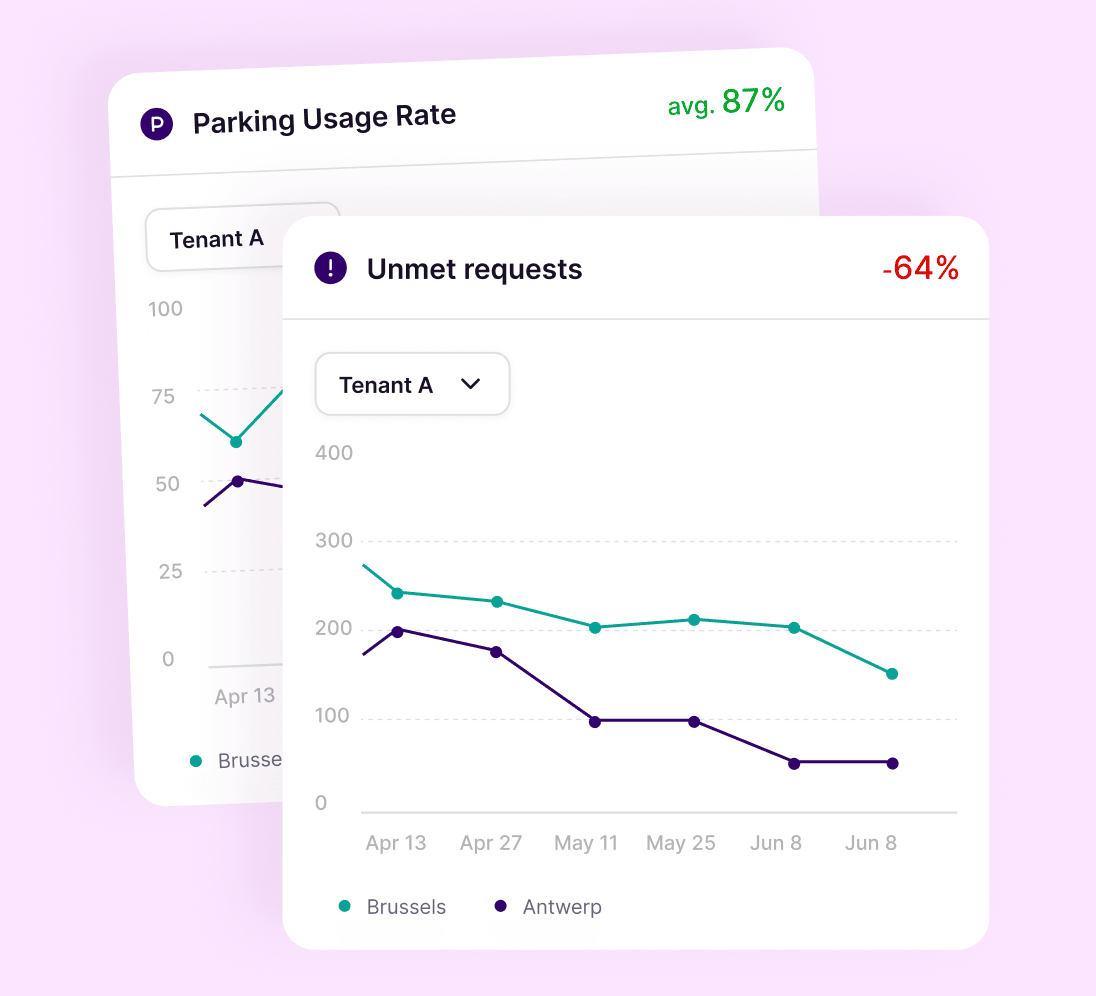
Occupancy per tenant, no-shows, unmet requests: real usage data replaces gut feeling — and gives you solid ground for every quota discussion.
- unmet requests are recorded, so you see the demand the car park never served
- no-shows counted separately from genuine use, tenant by tenant
- exportable per tenant, per site and per month for lease reviews

Rebalance quotas on facts, not complaints
Tenant A never fills its quota while tenant B queues? The data shows it, and we review it with you to rebalance — unused capacity becomes value instead of empty concrete, and the building runs full.
- when the building is full, the overflow goes to nearby public car parks, booked from the same app
- spare capacity is released day by day, without reopening a lease
- quotas can differ by site, by day of the week or by user group
Billing that builds itself
Parking usage, charging sessions, kWh delivered: Commuty turns actual consumption into per-tenant billing reports automatically. Month-end without the spreadsheet marathon.
- parking days and kWh on one report, per tenant
- figures come from the bookings and charging sessions themselves, not a manual count
- exportable straight into your own invoicing or property-management system

“Quota management is automated now — each tenant has access to its number of spaces, no more, no less. That brought the calm back, and it saves me a great deal of time.”


All features that come with a shared car park
Everything else your tenants need runs on the same platform for parking, charging, and commuting: gates that open from the same booking, visitors invited by the tenant hosting them, charging points shared in rotation rather than blocked all day, and places for the people who arrive on two wheels.
Lorem ipsum dolor sit amet, consectetur adipiscing elit. Suspendisse varius enim in eros elementum tristique.

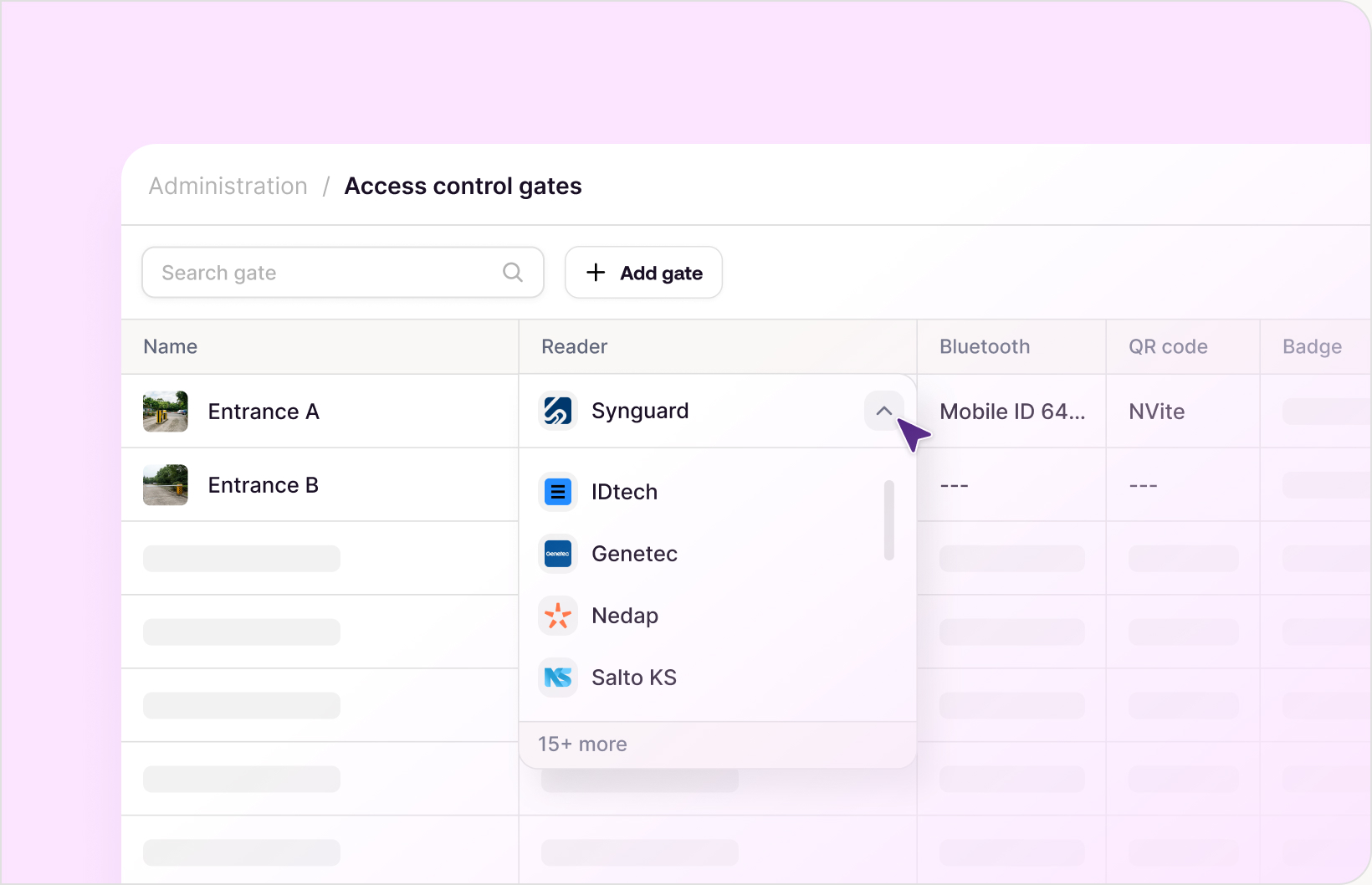
With our 30+ integrations, our platform can connect with most of the access control systems, automating building entrance seamlessly.
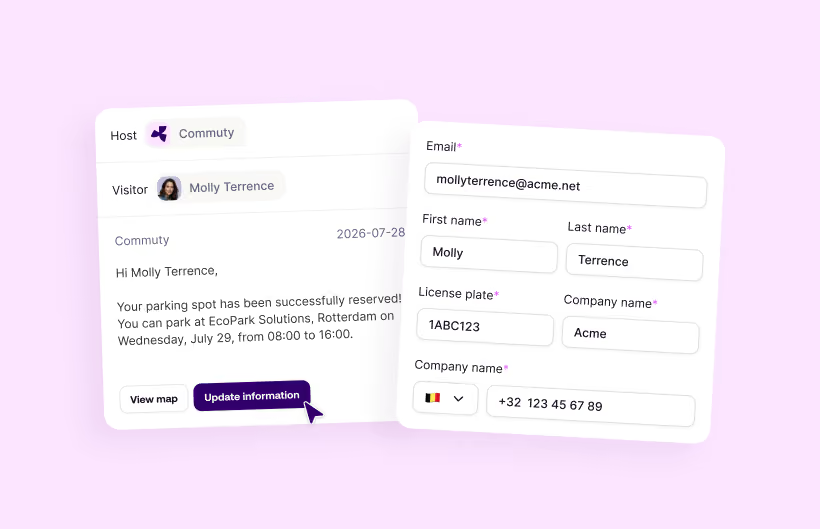
Granting parking to external visitors has never been easier. From the invite to on-site access, it’s all automated.
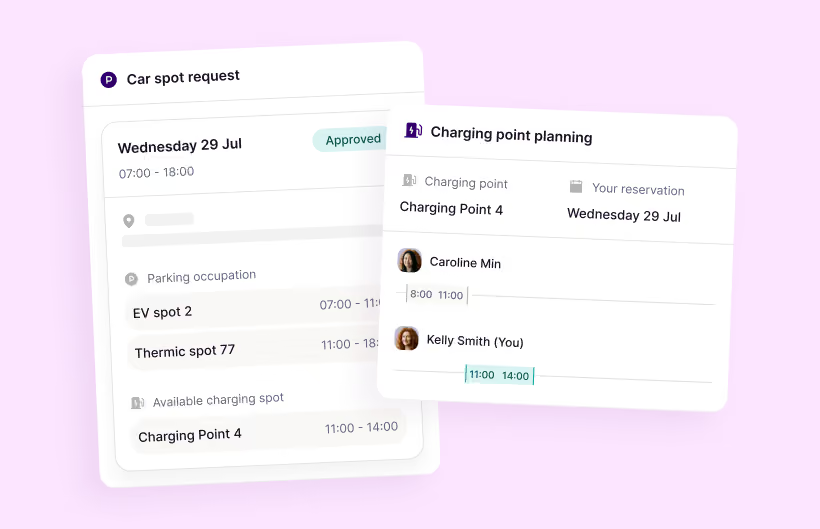
One charging point can serve several drivers a day. Commuty plans the handover and tells each driver when to plug in and when to move on, so a full charger is never a blocked one.
Two-wheelers get their own bookable spaces, with their own quotas and rules. Cyclists and riders arrive knowing there is somewhere to leave the bike.

Integrates with your ecosystem
Commuty integrates with the tools and systems you already use, from access control to EV charging and workplace platforms.
AI assistants
Book parking in plain words, from the AI assistant your company already uses: ChatGPT, Microsoft Copilot, Claude or Gemini.




User authentication & management
Commuty plugs into your identity stack: Active Directory, single sign-on over SAML 2.0 or OpenID Connect, and user provisioning through SCIM.


Public car parks
Renting spaces in a public car park? Commuty shares them among your people by booking and by your rules, rather than tying them to a fixed list of badge holders. Live integrations with Interparking, Q-Park and Indigo.


Beveiliging en gegevensprivacy in alles wat we doen





Word partnerPraat vandaag nog met Commuty
Wij helpen teams om parkeren, laden en woon-werkverkeer te laten werken in echte werkomgevingen.Wij helpen teams om parkeren, laden en woon-werkverkeer te laten werken in echte werkomgevingen.
Veelgestelde vragen
Vragen over hoe Commuty werkt? Vind hieronder de antwoorden of neem contact met ons op.
Boek een demoCommuty is a parking and mobility management platform that helps organisations manage parking, EV charging, and commuting using clear rules instead of first come, first served.
Commuty is especially useful when parking capacity is limited, EV charging demand is growing, or manual coordination no longer scales. It is designed for private parking in corporate environments, as well as shared parking in single- and multi-tenant buildings.
Commuty uses rule-based parking allocation instead of first come, first served or nominative spots. You define the rules that determine who gets access, based on criteria like user groups, commuting distance, parking usage or mobility choices. Access is allocated in advance, so users know ahead of time whether they have a spot on a given day.
When demand exceeds availability, clear priority rules decide who gets access, and anyone who misses out is told why. This keeps parking fair, predictable and transparent.
Yes. Commuty integrates with existing access control systems such as gates, badges, licence plate recognition, and EV chargers. There is no need to replace your current infrastructure.
EV charging is managed using the same rule-based approach as parking. You can define who gets access to chargers and how charging is shared over time. Charging sessions can rotate to avoid chargers staying blocked, helping you make better use of existing charging points.
Commuty can link parking access to commuting behaviour. Employees who car share, drive electric, or use alternative transport can be given better chances of accessing parking, turning sustainability goals into practical incentives.
Commuty provides visibility into parking usage, commuting behaviour, and charging activity. This includes metrics such as kilometres travelled, CO₂ savings, and energy usage, supporting reporting, planning, and investment decisions.