
Higher occupancy. New revenue. A better-performing asset.
The car park is one of the few parts of your building that can sit half-empty all day without anyone noticing. Commuty fills it on real demand, puts the spare capacity on the market, and gives you the figures to prove what it's worth.



They optimise their parking, EV charging and mobility with us





An asset nobody is measuring
Most car parks run on habit: fixed spaces per occupier, no view of what is used. So occupiers ask for more while spaces stand empty. Commuty allocates fairly and gives you the figures to prove it.
Fill it on demand. Sell what’s left.
Fixed allocations leave spaces empty while occupiers ask for more. Commuty allocates on the demand you actually have each day and balances capacity between occupiers. Whatever still stands empty — evenings, Fridays, holiday weeks — can be resold by the day or by the month through partner car parks.
- Daily allocation based on real demand, not fixed spaces
- Automatic balancing between occupiers
- Empty spaces resold as day or monthly passes

A building occupiers don't want to leave
Occupiers judge a building on how easy it is to arrive at. Commuty gives their people a spot when they need one, a charger that is actually free, and credit for cycling or sharing a car — parking, charging, and commuting in one app, under your building's rules. It makes the building easier to let, easier to keep let, and easier to certify.
- A better arrival experience for every occupier's staff
- Green commuting options promoted building-wide
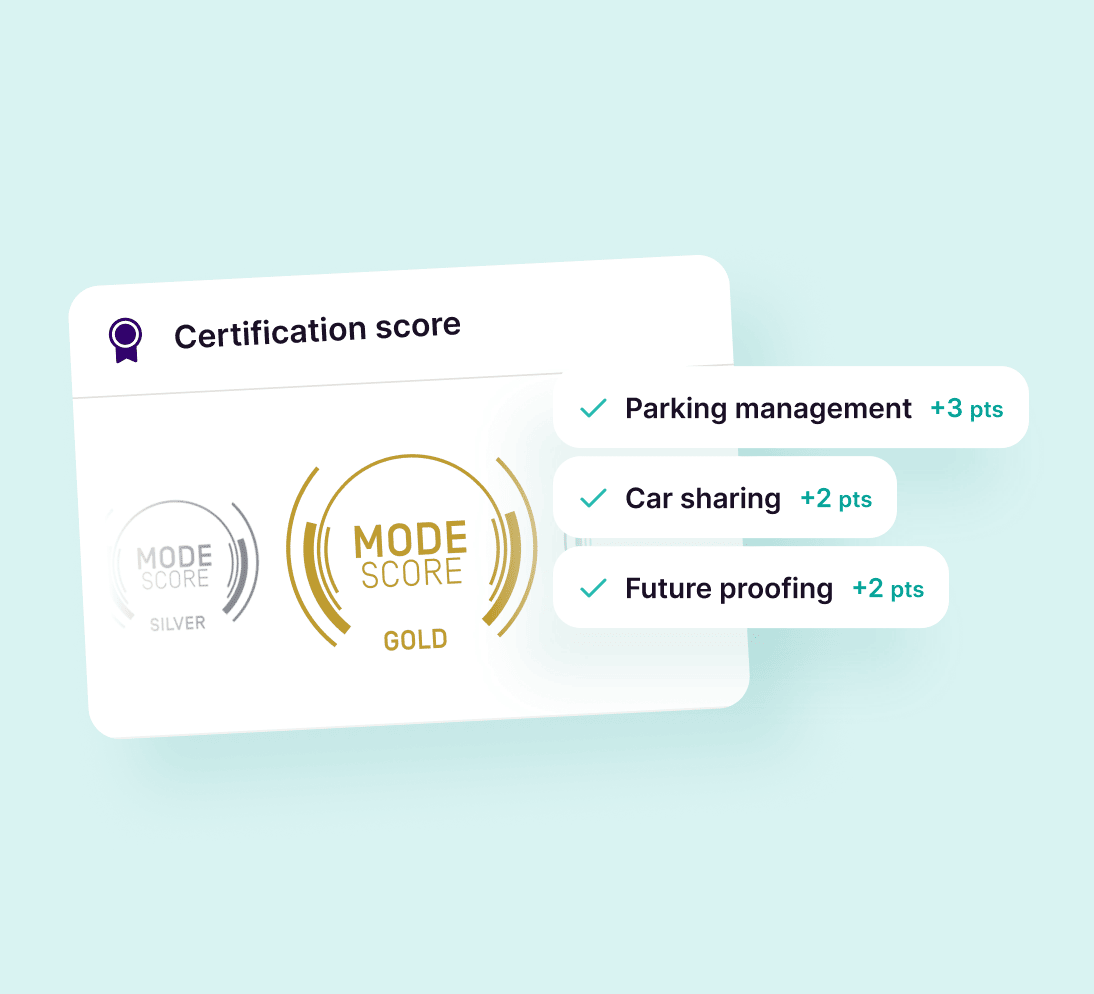
- Up to 14 ModeScore points — feeding GRESB, alongside BREEAM, LEED and WELL
Nothing to build. Nothing to install.
Commuty is software. It runs on the barriers, gates and chargers already in the building — we integrate with most access control systems and charge point operators. That means no capital expenditure, nothing added to your maintenance plan, and a project that goes live in weeks.
- Works with the hardware already in the building
- Integrates with most access control systems and CPOs
- No capital expenditure, nothing to maintain
Figures you can take to the owner
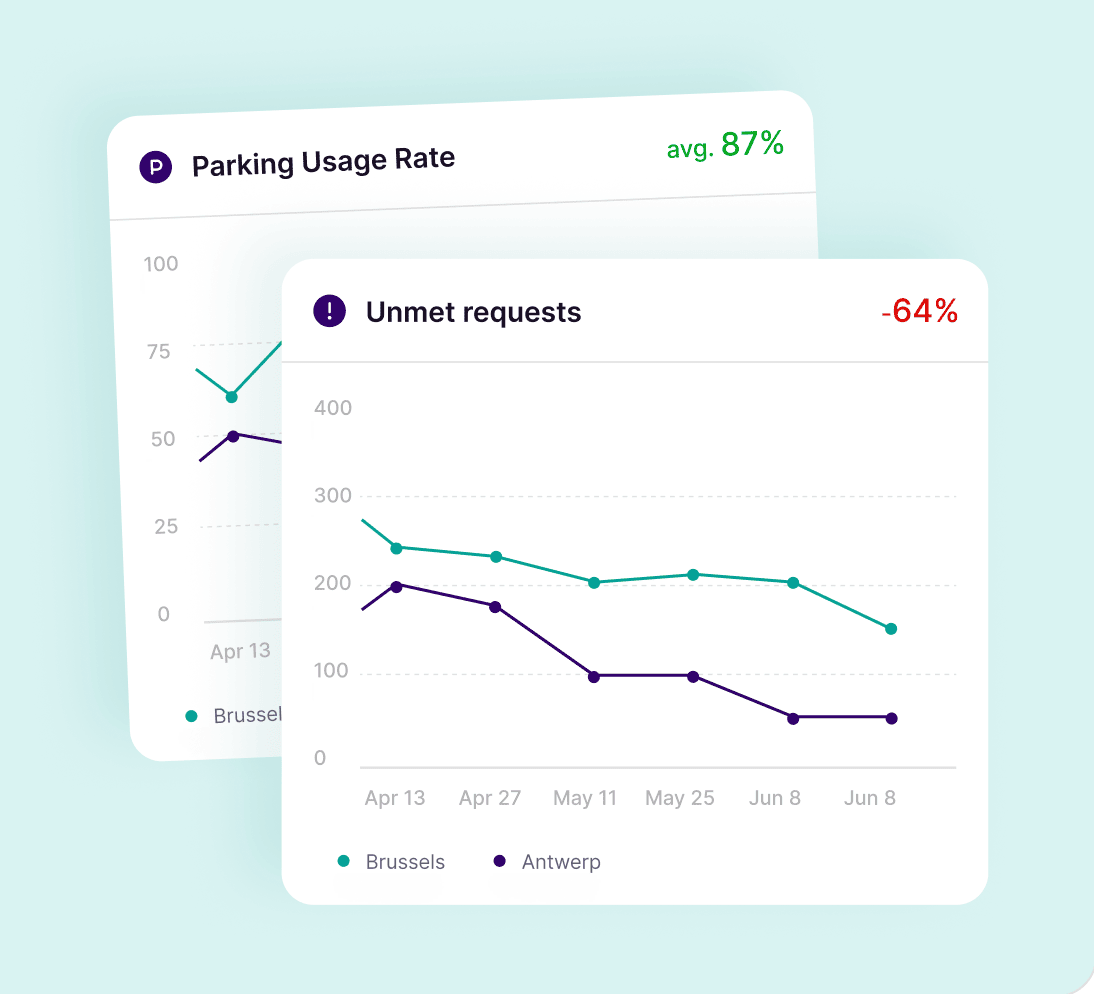
Occupancy by day and by occupier, charger use, requests you could not meet, no-shows. You can see whether another charger is justified before you buy it, support a rent review with evidence, and report the asset's performance without rebuilding a spreadsheet each quarter.
- Occupancy, charging and unmet-demand figures per building
- Decide on EV expansion with real usage behind you
- Owner-ready reporting, without the spreadsheet work
“Measuring how the car park is really used serves both our clients at once: first of all our tenants who get a better experience because their employees no longer circle for a space. Subsequently also our shareholders who get a better return because occupancy is maximised.”


All features for an Asset Manager
Beyond the daily allocation, the platform runs the commercial side of a shared car park: each occupier's share held automatically, the usage figures to decide how much space the building actually needs, chargers rotated so a full one is never a blocked one, and every tenant re-invoiced for exactly what they used.
Lorem ipsum dolor sit amet, consectetur adipiscing elit. Suspendisse varius enim in eros elementum tristique.

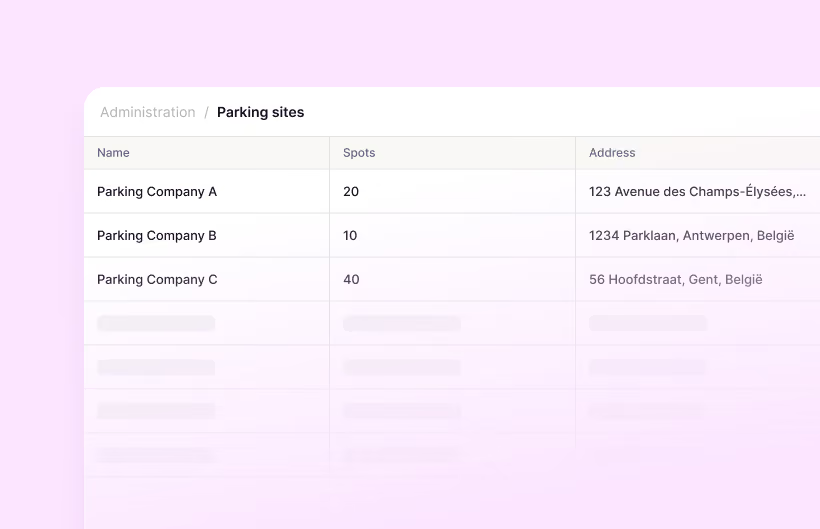
Give each site, tenant or team its own share of the spaces, and let the platform hold the line. Quotas are applied as bookings come in, so no one has to arbitrate day to day.
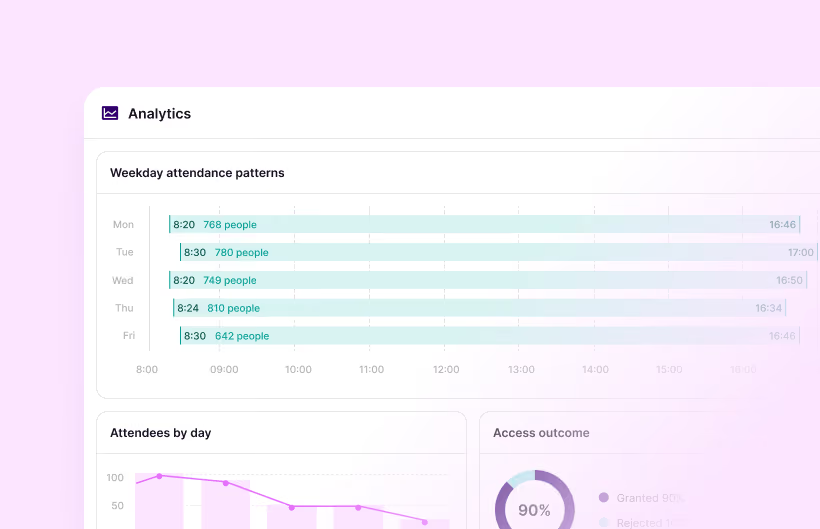
See how your sites are really used — attendance by day, peak pressure, access outcomes. Real numbers replace assumptions when you decide how many spaces you actually need.
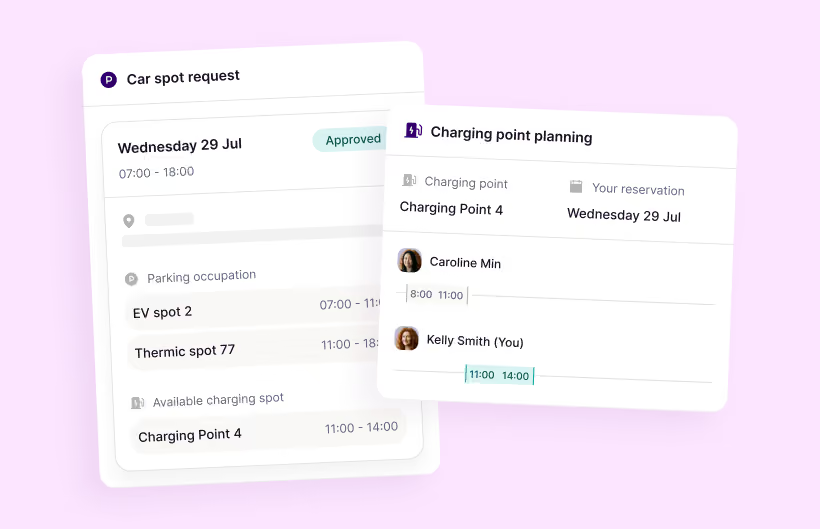
One charging point can serve several drivers a day. Commuty plans the handover and tells each driver when to plug in and when to move on, so a full charger is never a blocked one.
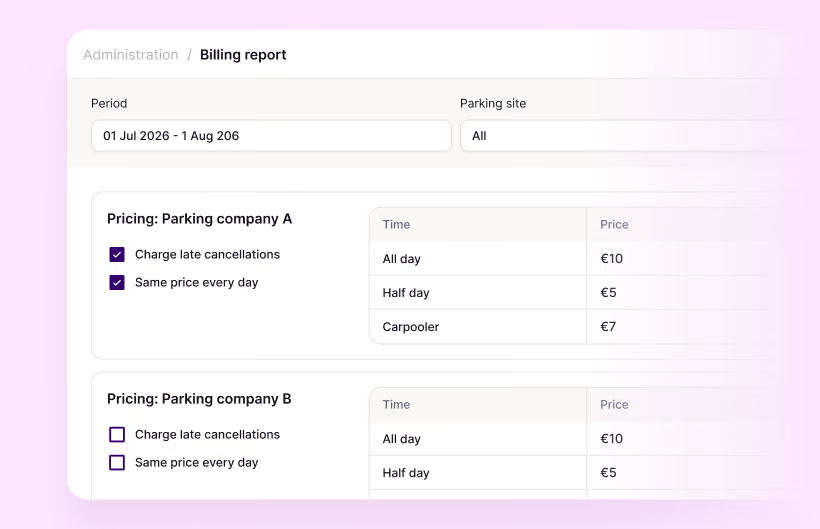
Every tenant is billed for exactly what they used, following the pricing rules you set. The report is generated for you, so re-invoicing a shared car park no longer means a spreadsheet.
Challenges you might have



Integrates with your ecosystem
Commuty integrates with the tools and systems you already use, from access control to EV charging and workplace platforms.
Parking access control
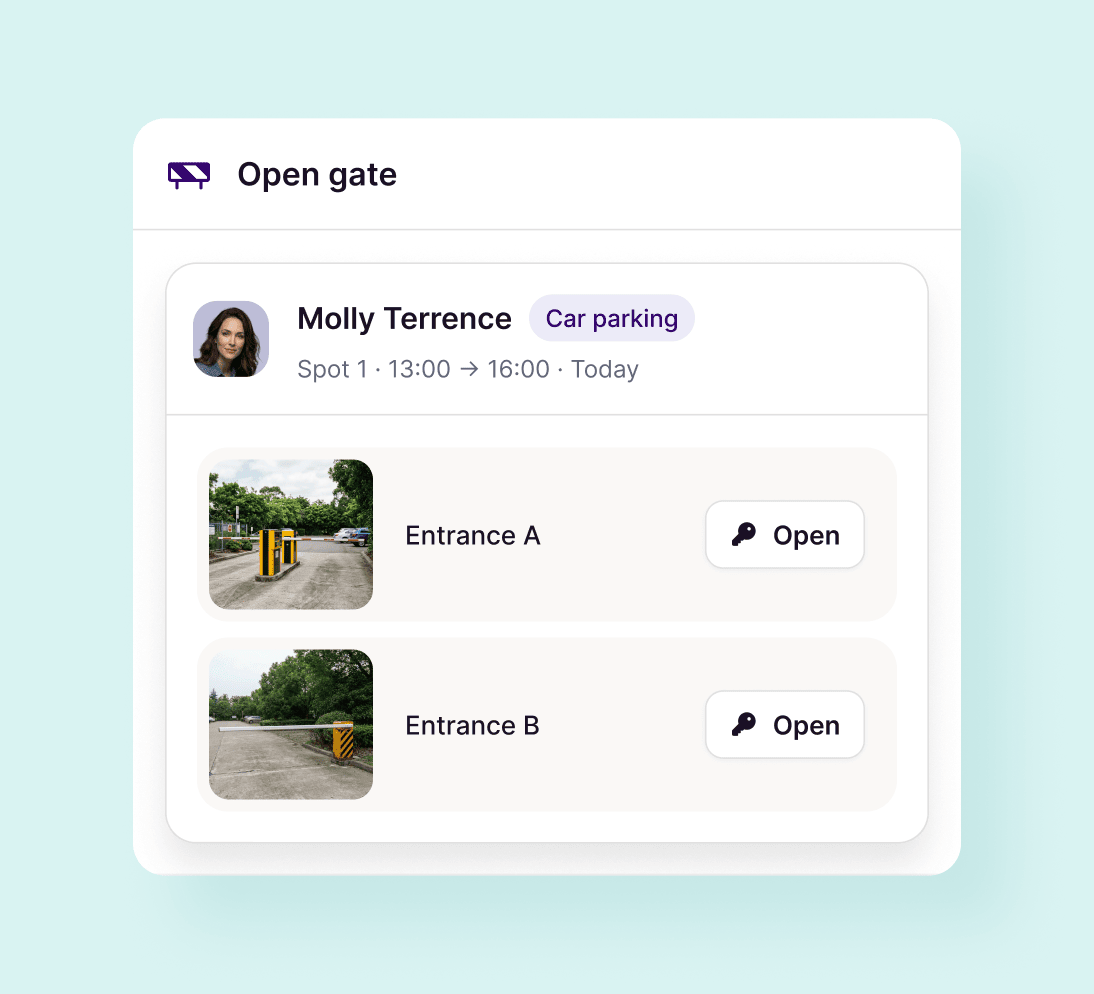
Commuty grants and revokes parking access directly in the system you already own: Nedap, Genetec, Honeywell, Siemens, Salto and many more. No new hardware to install.





Public car parks
Renting spaces in a public car park? Commuty shares them among your people by booking and by your rules, rather than tying them to a fixed list of badge holders. Live integrations with Interparking, Q-Park and Indigo.


EV charging
Commuty decides who may charge and when, and reads every session back. Integrated with Optimile and the operators who white-label it.


Beveiliging en gegevensprivacy in alles wat we doen





Word partnerPraat vandaag nog met Commuty
Wij helpen teams om parkeren, laden en woon-werkverkeer te laten werken in echte werkomgevingen.Wij helpen teams om parkeren, laden en woon-werkverkeer te laten werken in echte werkomgevingen.
Veelgestelde vragen
Vragen over hoe Commuty werkt? Vind hieronder de antwoorden of neem contact met ons op.
Boek een demoCommuty is a parking and mobility management platform that helps organisations manage parking, EV charging, and commuting using clear rules instead of first come, first served.
Commuty is especially useful when parking capacity is limited, EV charging demand is growing, or manual coordination no longer scales. It is designed for private parking in corporate environments, as well as shared parking in single- and multi-tenant buildings.
Commuty uses rule-based parking allocation instead of first come, first served or nominative spots. You define the rules that determine who gets access, based on criteria like user groups, commuting distance, parking usage or mobility choices. Access is allocated in advance, so users know ahead of time whether they have a spot on a given day.
When demand exceeds availability, clear priority rules decide who gets access, and anyone who misses out is told why. This keeps parking fair, predictable and transparent.
Yes. Commuty integrates with existing access control systems such as gates, badges, licence plate recognition, and EV chargers. There is no need to replace your current infrastructure.
EV charging is managed using the same rule-based approach as parking. You can define who gets access to chargers and how charging is shared over time. Charging sessions can rotate to avoid chargers staying blocked, helping you make better use of existing charging points.
Commuty can link parking access to commuting behaviour. Employees who car share, drive electric, or use alternative transport can be given better chances of accessing parking, turning sustainability goals into practical incentives.
Commuty provides visibility into parking usage, commuting behaviour, and charging activity. This includes metrics such as kilometres travelled, CO₂ savings, and energy usage, supporting reporting, planning, and investment decisions.