
Turn the way people reach your building into certification points
From ModeScore to BREEAM to CSRD reporting, certifiers and auditors increasingly measure how people reach your building. Commuty turns your parking and commuting policy into measurable points, audit-ready data, and genuine CO2 savings.
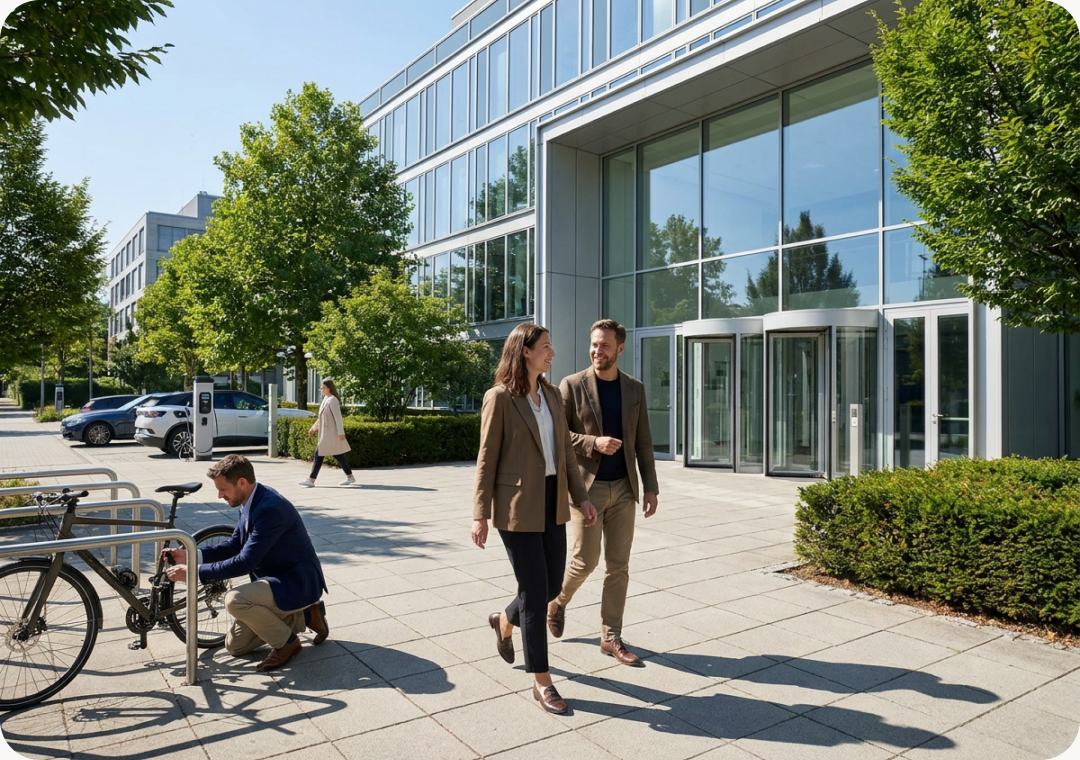

We help teams manage the commute every day











Your building is now scored on how people reach it
BREEAM, WELL, GRESB and CSRD all look at how people travel to work — and all of them want evidence. Commuty turns the parking, charging, and commuting policy you already run into points you can claim and data an auditor accepts.
Everything you need to solve certification and ESG reporting
Audit-ready commuting data, out of the box
Certifiers and CSRD auditors ask for evidence, not intentions. Commuty logs how your people actually commute — car, carpool, bike — and turns it into reports ready for Scope 3, the Belgian federal commuting survey, and certification files.
- Every commute declared by mode, distance and CO2
- Exports for Scope 3 and the Belgian federal commuting survey
- Figures come from actual bookings and declarations

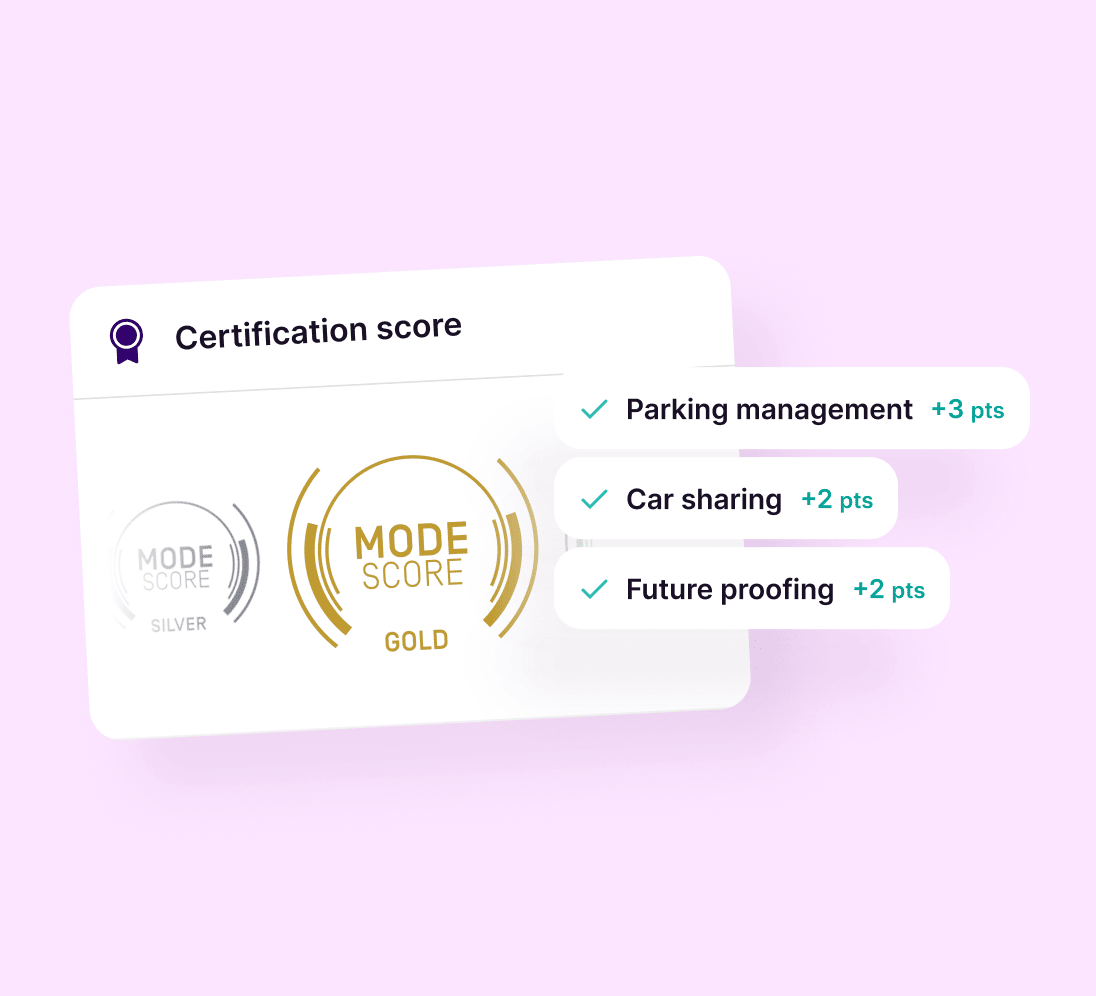
Up to 14 ModeScore points from your car park alone
Parking management, usage reviews and car-sharing enablement: Commuty can contribute up to 14 points to your building's ModeScore — a certification that feeds GRESB and supports BREEAM and WELL.
- Points come from how the car park is run, not from new construction
- Both tenant and visitor journeys count towards the score
- Certification runs quickly and entirely digitally with Urbanite Advisors
Make green commuting happen, not just report it
Carpool matching and priorities, bike refunds, tax advantages: Commuty rewards the behaviours certifiers want to see — and counts every saved kilometre and kilo of CO2.
- Carpoolers get first claim on a parking spot, automatically
- Bike and carpool kilometres are computed, then passed to payroll for reimbursement
- The Belgian carpool tax certificate is generated for you

And we help you reach the next level, year after year
Certifications get renewed and levels climb. Our customer success team reviews your real usage data with you and keeps fine-tuning the policy — from Certified towards Silver, Gold, Platinum.
- A named customer success manager reviews your usage data with you
- Rules and priorities adjusted as occupancy and behaviour change
- Re-certification prepared from the same data, with no new survey

“Mobility is one of the most effective levers a building owner has to cut employment-related emissions, and parking management is a great place to start.”


All features that raise the score, not just the report
Certification rewards what people can actually do on site. Commuty gives cyclists and riders a space of their own, brings visitor journeys into the same system, shares the charging points you already have, and holds each occupier to an agreed number of car spaces.
Lorem ipsum dolor sit amet, consectetur adipiscing elit. Suspendisse varius enim in eros elementum tristique.
Two-wheelers get their own bookable spaces, with their own quotas and rules. Cyclists and riders arrive knowing there is somewhere to leave the bike.

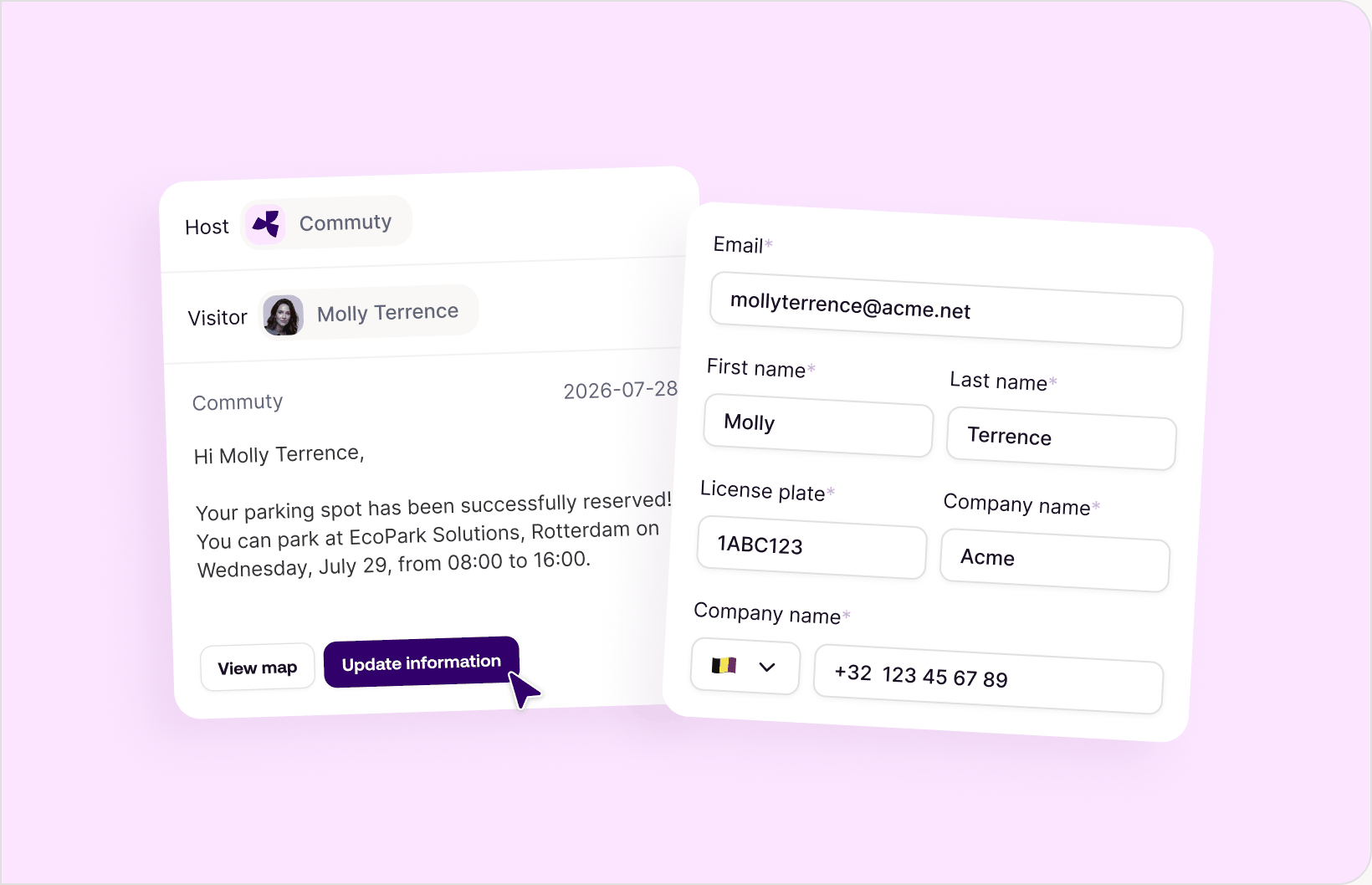
Granting parking to external visitors has never been easier. From the invite to on-site access, it’s all automated.
Decide how your charging points are shared — by timeslot, by a free switch, or by cable. Priority levels keep the drivers who need a charge that day in front of the queue.

Give each site, tenant or team its own share of the spaces, and let the platform hold the line. Quotas are applied as bookings come in, so no one has to arbitrate day to day.

Integrates with your ecosystem
Commuty integrates with the tools and systems you already use, from access control to EV charging and workplace platforms.
AI assistants
Book parking in plain words, from the AI assistant your company already uses: ChatGPT, Microsoft Copilot, Claude or Gemini.




User authentication & management
Commuty plugs into your identity stack: Active Directory, single sign-on over SAML 2.0 or OpenID Connect, and user provisioning through SCIM.


Public car parks
Renting spaces in a public car park? Commuty shares them among your people by booking and by your rules, rather than tying them to a fixed list of badge holders. Live integrations with Interparking, Q-Park and Indigo.


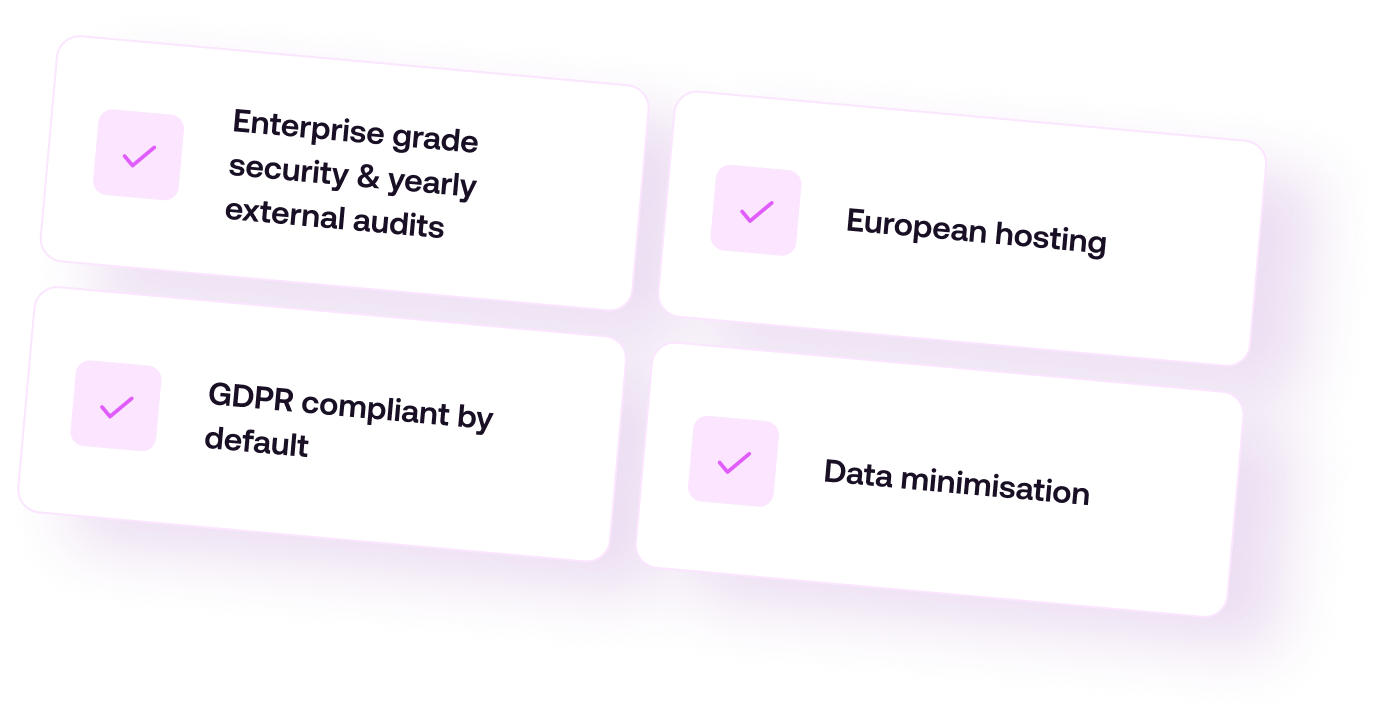
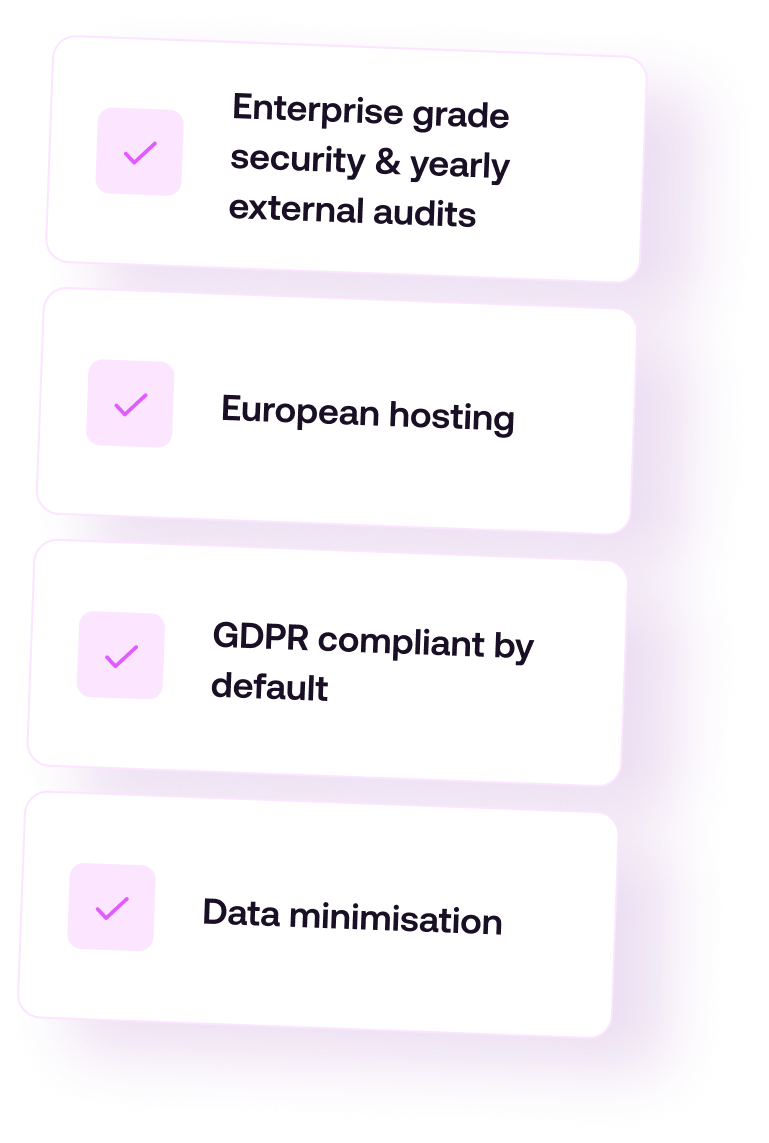
Security & data privacy in everything we do





Talk to Commuty today
We help teams make parking, charging, and commuting, work in real working environments.
Commuty is a parking and mobility management platform that helps organisations manage parking, EV charging, and commuting using clear rules instead of first come, first served.
Commuty is especially useful when parking capacity is limited, EV charging demand is growing, or manual coordination no longer scales. It is designed for private parking in corporate environments, as well as shared parking in single- and multi-tenant buildings.
Commuty uses rule-based parking allocation instead of first come, first served or nominative spots. You define the rules that determine who gets access, based on criteria like user groups, commuting distance, parking usage or mobility choices. Access is allocated in advance, so users know ahead of time whether they have a spot on a given day.
When demand exceeds availability, clear priority rules decide who gets access, and anyone who misses out is told why. This keeps parking fair, predictable and transparent.
Yes. Commuty integrates with existing access control systems such as gates, badges, licence plate recognition, and EV chargers. There is no need to replace your current infrastructure.
EV charging is managed using the same rule-based approach as parking. You can define who gets access to chargers and how charging is shared over time. Charging sessions can rotate to avoid chargers staying blocked, helping you make better use of existing charging points.
Commuty can link parking access to commuting behaviour. Employees who car share, drive electric, or use alternative transport can be given better chances of accessing parking, turning sustainability goals into practical incentives.
Commuty provides visibility into parking usage, commuting behaviour, and charging activity. This includes metrics such as kilometres travelled, CO₂ savings, and energy usage, supporting reporting, planning, and investment decisions.